Kindergarten CVC Word Family Part 3 – Build Stronger Phonics and Reading Skills
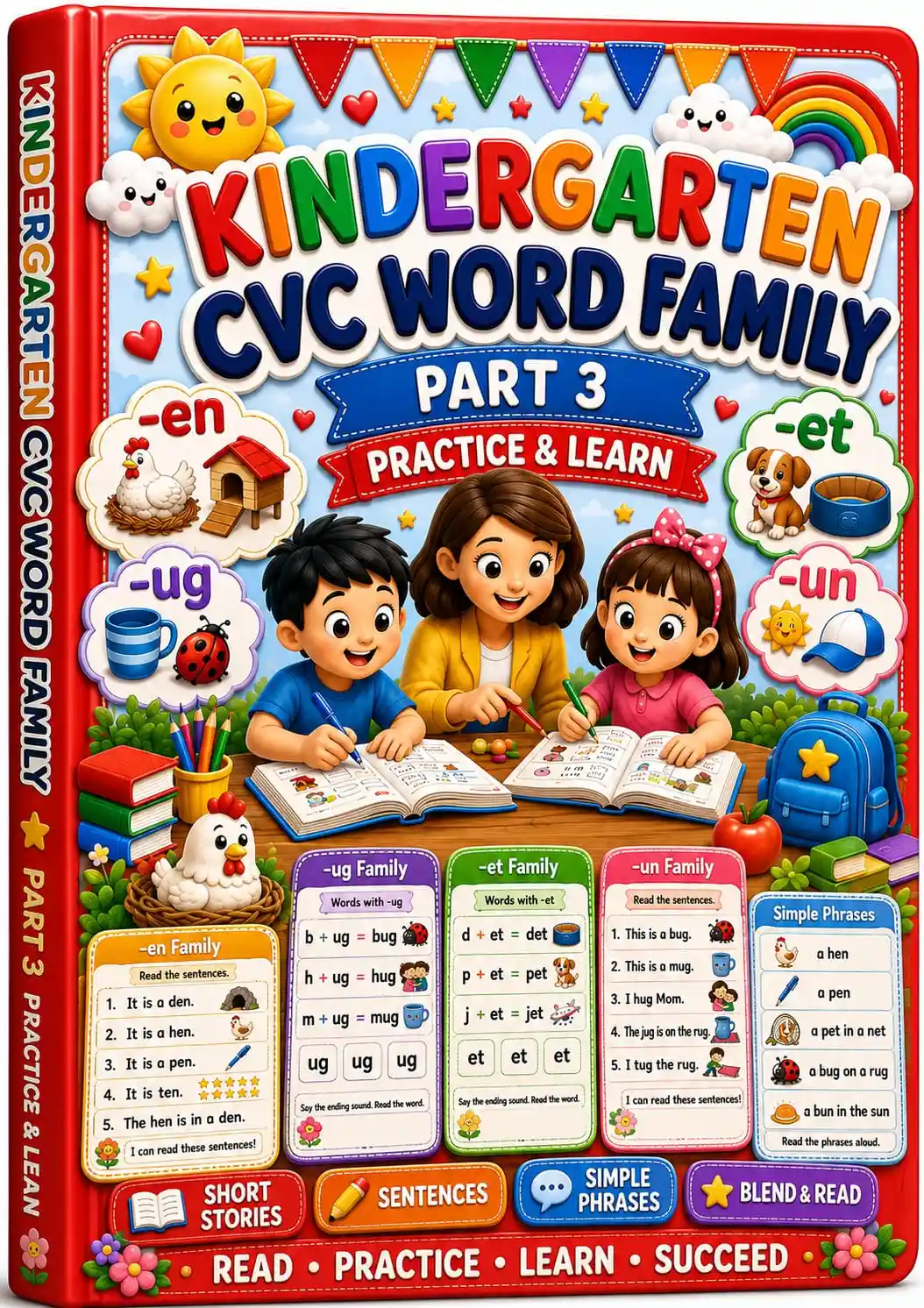
Kindergarten CVC Word Family Part 3 is a helpful early literacy resource for children who are ready to continue building their phonics, decoding, spelling, and vocabulary skills. As young learners become familiar with basic CVC words, practicing additional word families can help them recognize patterns, blend sounds, and read simple words with greater confidence.
What Are CVC Word Families?
CVC means Consonant-Vowel-Consonant. Words such as cat, bed, pig, hot, and sun follow this simple structure. CVC word families group words that share a similar ending pattern and sound.
For example, children who know the -an family can read man, fan, pan, and van by recognizing the familiar pattern.
Kindergarten CVC Word Family Part 3 can build on earlier phonics practice by introducing more word combinations and encouraging children to use familiar sounds in new words.
Strengthen Sound Blending
Blending is an important skill for beginning readers. Children learn to say individual sounds and combine them smoothly to form a word.
For example:
r – u – n → run
After reading the word, children can change the first letter to create another word:
run → fun → sun → bun
This activity helps learners understand how changing one sound can change the meaning of a word.
Explore More Word Families
Children can practice a variety of short-vowel CVC patterns, such as:
- -ad: bad, dad, mad, sad
- -en: hen, pen, ten, den
- -ig: big, dig, pig, wig
- -ot: hot, pot, dot, lot
- -un: bun, fun, run, sun
Working with these patterns can make decoding unfamiliar words easier and more predictable.
Improve Early Spelling Skills
Phonics practice supports spelling as well as reading. Ask children to listen carefully to a word, identify each sound, and choose the letters needed to spell it.
The Kindergarten CVC Word Family Part 3 approach can also include dictation activities. Say a simple word such as “pig,” let the child identify the three sounds, and then write the corresponding letters.
Read Words in Simple Sentences
Once children can read individual CVC words, move toward short sentences. For example:
The pig is big.
The dog can hop.
Sam has a hat.
Reading words in context helps children understand that phonics skills are connected to meaningful communication.
Make Practice Fun
Parents and teachers can turn word-family practice into interactive games. Use letter cards to build words, picture cards for matching activities, or simple word hunts where children find words belonging to a particular family.
Short activities with frequent encouragement can keep kindergarten learners motivated and engaged.
Create a Daily Reading Routine
A 10–15-minute daily routine can provide valuable practice. Review familiar sounds, introduce one word family, blend several words, practice spelling, and finish with a few simple sentences.
Using Kindergarten CVC Word Family Part 3 regularly can reinforce previous skills while helping children become more comfortable with new CVC patterns.
Final Thoughts
Kindergarten CVC Word Family Part 3 can be a useful resource for strengthening foundational reading and phonics skills. Through word-family practice, blending, spelling, sentence reading, and engaging activities, children can develop greater confidence in decoding and recognizing simple words.
With consistent practice and positive encouragement, young learners can build a strong foundation for fluent reading and future literacy development.