
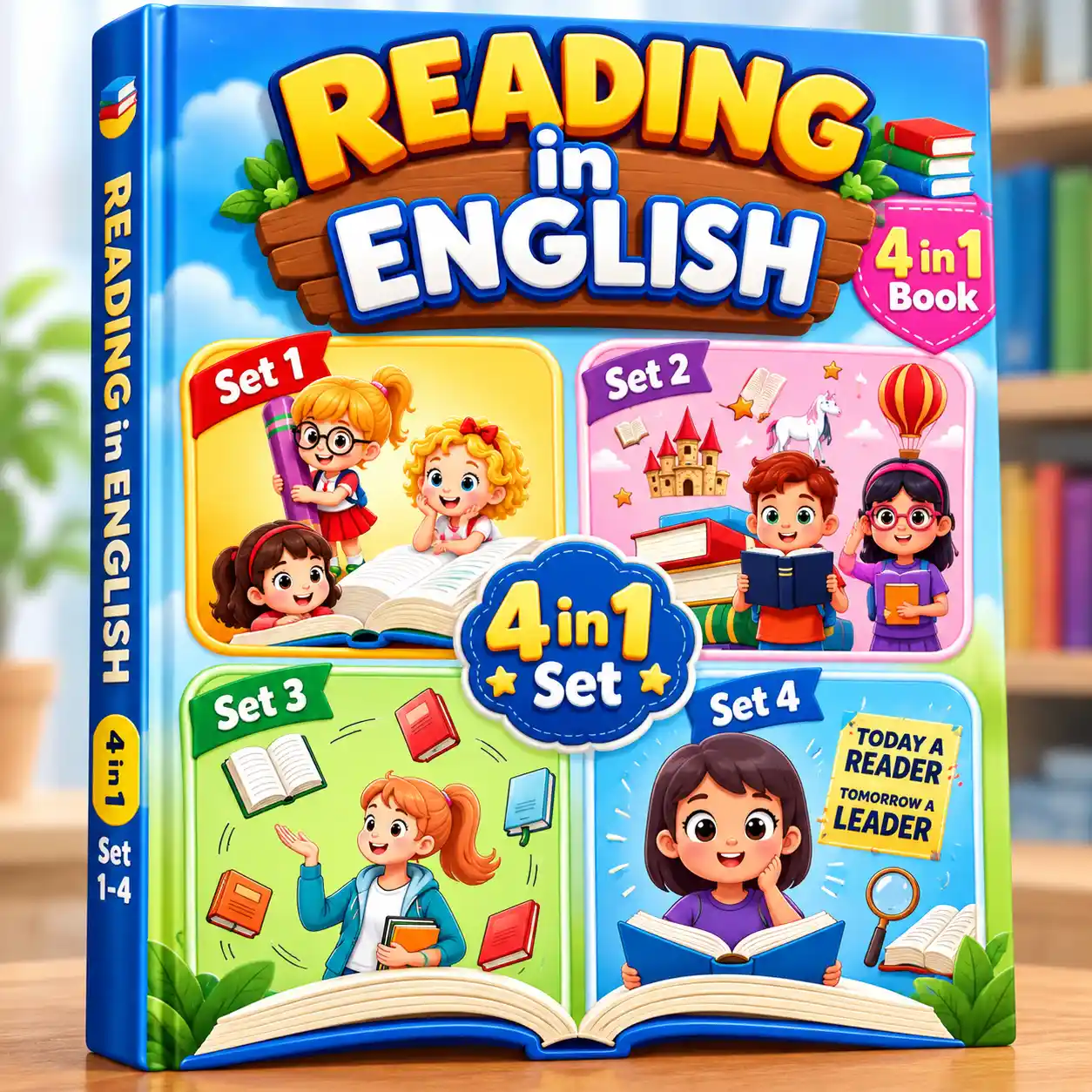
Beginning Reading in English (Set 1-2-3-4) – Build Strong Early Reading Skills
Beginning Reading in English (Set 1-2-3-4) is a useful learning resource for children who are starting their journey toward confident English reading. A structured set can give young learners opportunities to practice letters, sounds, simple words, sentences, vocabulary, and basic comprehension in a gradual way. Step-by-step phonics practice is especially valuable because children can develop decoding skills before moving toward more fluent reading.
Start With Letters and Sounds
Early reading begins with understanding the relationship between letters and sounds. Children can practice recognizing letters, saying their sounds, and identifying familiar words that begin with those sounds.
Beginning Reading in English (Set 1-2-3-4) can be used to introduce these skills progressively. Parents and teachers can begin with simple sound recognition and gradually move toward blending sounds into complete words.
Build Phonics and Decoding Skills
Phonics helps children understand how written letters represent spoken sounds. Once children know individual sounds, they can begin blending them together to read short words.
For example:
c – a – t → cat
s – u – n → sun
p – e – n → pen
Regular decoding practice helps children become more comfortable approaching unfamiliar words independently.
Progress From Words to Sentences
As learners become familiar with basic words, they can begin reading short sentences. Simple sentences provide an important bridge between individual word recognition and meaningful reading.
For example:
The cat is big.
Sam has a red hat.
The dog can run.
The Beginning Reading in English (Set 1-2-3-4) approach can support this progression by giving learners repeated opportunities to practice increasingly useful reading patterns.
Develop Vocabulary
Reading practice is also an opportunity to introduce new vocabulary. Children can learn words connected to familiar topics such as animals, family, food, school, colors, toys, and everyday activities.
After learning a new word, encourage children to say it aloud, identify a picture that represents it, and use it in a simple sentence. This connects reading with speaking and listening.
Improve Reading Fluency
Fluency develops through regular reading practice. Children can reread familiar words and short passages until they become easier to recognize.
Parents and teachers can encourage children to read aloud without rushing. Praise effort and accuracy, and gently correct mistakes so learners remain motivated.
Make Reading Fun
Young learners often respond well to interactive activities. Letter cards, word matching, picture clues, tracing, word-building games, and short reading challenges can make lessons more engaging.
The four-set structure can also help parents and teachers organize practice into manageable stages rather than introducing too many new concepts at once.
Create a Daily Reading Routine
A short 10–20-minute reading routine can be effective. Begin with a quick sound review, practice several words, read a few sentences, and finish with a simple comprehension question.
Using Beginning Reading in English (Set 1-2-3-4) consistently can help children reinforce previously learned skills while gradually developing new ones.
Final Thoughts
Beginning Reading in English (Set 1-2-3-4) can be a valuable addition to an early literacy routine. By combining phonics, decoding, vocabulary, sentence reading, and repeated practice, children can develop the foundational skills needed for independent reading.
With patience, encouragement, and consistent practice, young learners can become more confident readers and discover that learning English can be both enjoyable and rewarding.