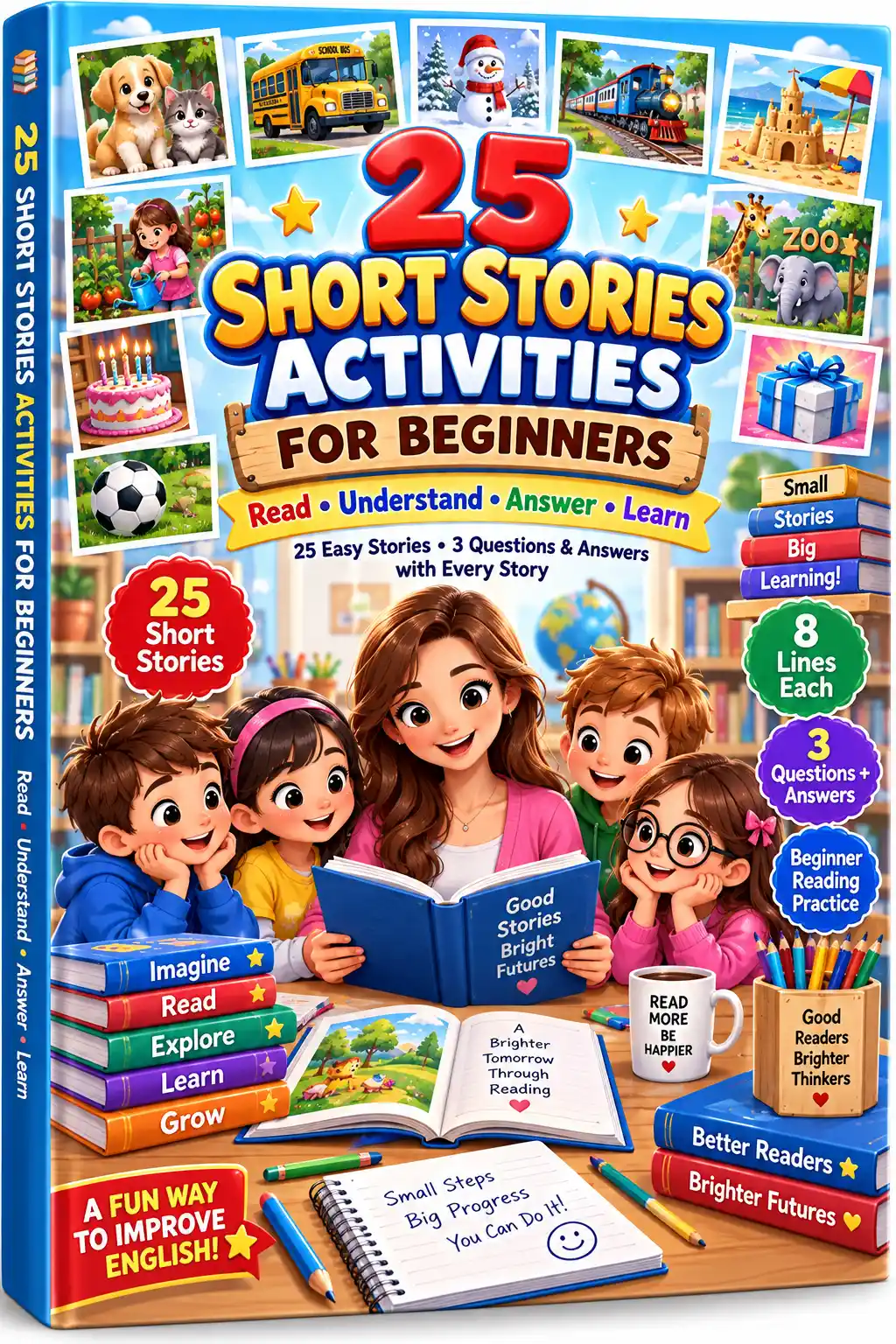
25 Short Stories Activities for Beginners – Improve English Through Simple Stories
25 Short Stories Activities for Beginners is a useful learning resource for students who want to improve their English through short, manageable stories and engaging activities. Beginner learners often benefit from simple texts because they can focus on understanding vocabulary, sentence patterns, and meaning without becoming overwhelmed by difficult language. Story-based activities can also make reading practice more enjoyable and memorable.
Build Reading Confidence
Short stories give beginners an opportunity to practice reading in a controlled context. Instead of studying individual vocabulary words separately, learners can see how words are used in complete sentences.
25 Short Stories Activities for Beginners can help students gradually become more comfortable with common English expressions and sentence structures. Reading short passages regularly can encourage learners to recognize familiar words faster and understand the overall meaning of a text.
Develop Vocabulary Naturally
Vocabulary is an essential part of language learning. Stories introduce words in context, which can make their meaning easier to understand and remember. Beginners can highlight unfamiliar words, look up their meanings, and then reread the story to see how those words work in context.
After completing 25 Short Stories Activities for Beginners, learners can create personal vocabulary lists based on the stories they have read. This provides a simple way to review nouns, verbs, adjectives, and everyday expressions.
Improve Reading Comprehension
Reading comprehension involves more than recognizing words. Students also need to understand characters, events, details, sequence, and the main idea.
Activities such as multiple-choice questions, true-or-false statements, matching exercises, WH-questions, and short-answer tasks can encourage learners to think carefully about what they have read. Beginner story resources frequently pair short passages with comprehension questions to develop these skills.
Practice Grammar Through Stories
Stories can also provide useful grammar practice. Learners can identify verbs, nouns, pronouns, articles, prepositions, and basic sentence structures while reading. Teachers can ask students to find examples from a story and then create their own sentences using the same patterns.
This makes grammar more practical because students see how structures function in meaningful communication rather than studying rules in isolation.
Encourage Speaking and Retelling
One effective follow-up activity is story retelling. After reading a short story, learners can explain what happened using their own words. This encourages them to reuse vocabulary and sentence structures they have just encountered. Story-retelling activities are also commonly recommended for helping beginners practice newly learned language.
25 Short Stories Activities for Beginners can therefore support both receptive and productive skills. Teachers can ask students to work in pairs, answer questions, describe pictures, or act out simple scenes from a story.
Create a Daily Learning Routine
Learners can read one short story each day, review five to ten new words, complete the accompanying activities, and finish by speaking or writing a few sentences about the story. Consistent practice is easier to maintain when activities are short and achievable.
Final Thoughts
25 Short Stories Activities for Beginners provides a practical way to combine reading, vocabulary, grammar, comprehension, speaking, and writing practice. By working with short stories regularly, beginners can gradually build confidence and develop stronger English skills. 25 Short Stories Activities for Beginners can be a useful addition to classroom lessons, tutoring, homeschooling, or independent English study.