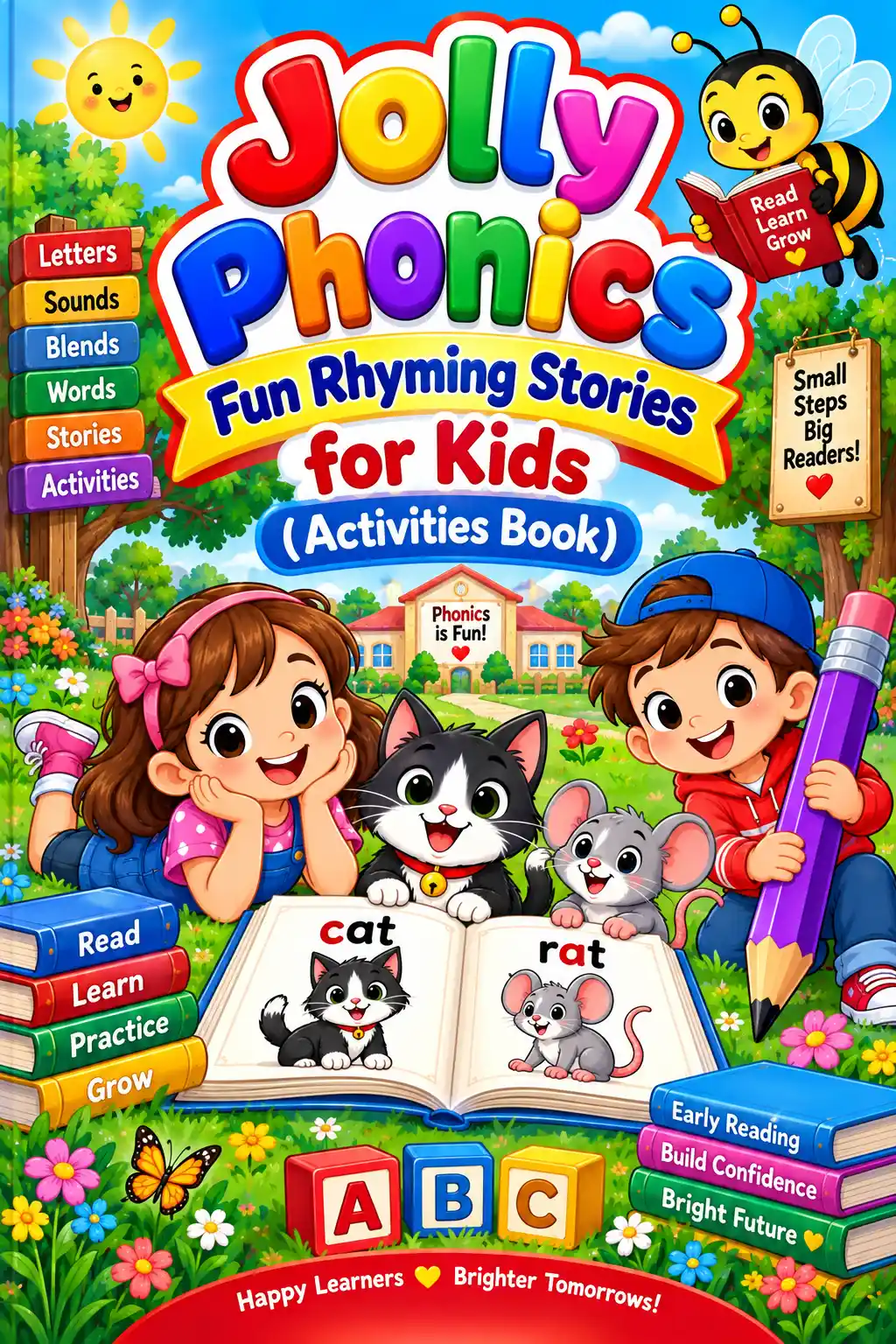
Jolly Phonics Fun Rhyming Stories for Kids (Activities Book) – Make Early Reading Fun
Jolly Phonics Fun Rhyming Stories for Kids (Activities Book) is a child-friendly resource that can make early reading and phonics practice more enjoyable. Rhyming words help young learners notice similarities in sounds, recognize word patterns, develop phonological awareness, and prepare for successful reading and spelling. Combining rhymes with short stories and activities gives children opportunities to practice language skills in an engaging context.
Build Phonological Awareness
Before children become fluent readers, they need to learn how sounds work together. Rhyming activities encourage learners to listen carefully to words and identify words that have similar ending sounds.
Jolly Phonics Fun Rhyming Stories for Kids (Activities Book) can support this early stage by introducing rhyme through playful reading activities. Children may identify rhyming pairs, complete familiar patterns, match words, or find words that sound alike.
These activities can make sound awareness feel like a game rather than a difficult academic task.
Strengthen Early Phonics Skills
Phonics teaches children how letters and sounds work together. Rhyming practice complements phonics because children begin to recognize recurring sound patterns in words.
For example, once a child becomes familiar with one rhyming pattern, it becomes easier to notice other words with the same ending sound. This can support word recognition, blending, spelling, and vocabulary development.
FIMS Teaching Resources specifically lists Jolly Phonics Fun exercises to learn rhyming words alongside other phonics resources, including CVC reading and word-family activities.
Make Reading More Enjoyable
Young children often learn best when lessons include stories, repetition, and playful activities. Jolly Phonics Fun Rhyming Stories for Kids (Activities Book) can combine these elements to create a more enjoyable literacy routine.
Short rhyming stories can introduce children to simple vocabulary and repeated language patterns. Reading the same story several times can also help children become familiar with words and sentence structures.
Parents can read the story aloud first and then encourage children to join in with repeated words or rhyming phrases.
Develop Vocabulary and Comprehension
Rhyming stories are not only about sounds. They can also introduce new vocabulary and provide opportunities to discuss characters, actions, settings, and events.
After reading a story, adults can ask simple questions such as Who was in the story? What happened? Which words rhymed? These questions encourage children to listen carefully and think about meaning.
Jolly Phonics Fun Rhyming Stories for Kids (Activities Book) can therefore support multiple early-literacy skills at the same time.
Encourage Speaking and Confidence
Rhyming activities can also encourage children to speak. Asking learners to suggest another rhyming word, complete a sentence, or repeat a fun phrase gives them opportunities to experiment with sounds and vocabulary.
A positive, low-pressure environment can help young learners become more confident when participating in reading activities.
Create a Simple Daily Routine
Parents and teachers can use Jolly Phonics Fun Rhyming Stories for Kids (Activities Book) for short daily sessions. Start with a few rhyming words, read a short story together, complete one or two activities, and finish by asking the child to identify the rhyming patterns.
Final Thoughts
Jolly Phonics Fun Rhyming Stories for Kids (Activities Book) offers an engaging way to combine rhyming, phonics, stories, vocabulary, and early comprehension practice. With regular activities, children can develop stronger sound awareness and greater confidence with language. Used consistently, Jolly Phonics Fun Rhyming Stories for Kids (Activities Book) can make the early journey toward reading more enjoyable and rewarding.