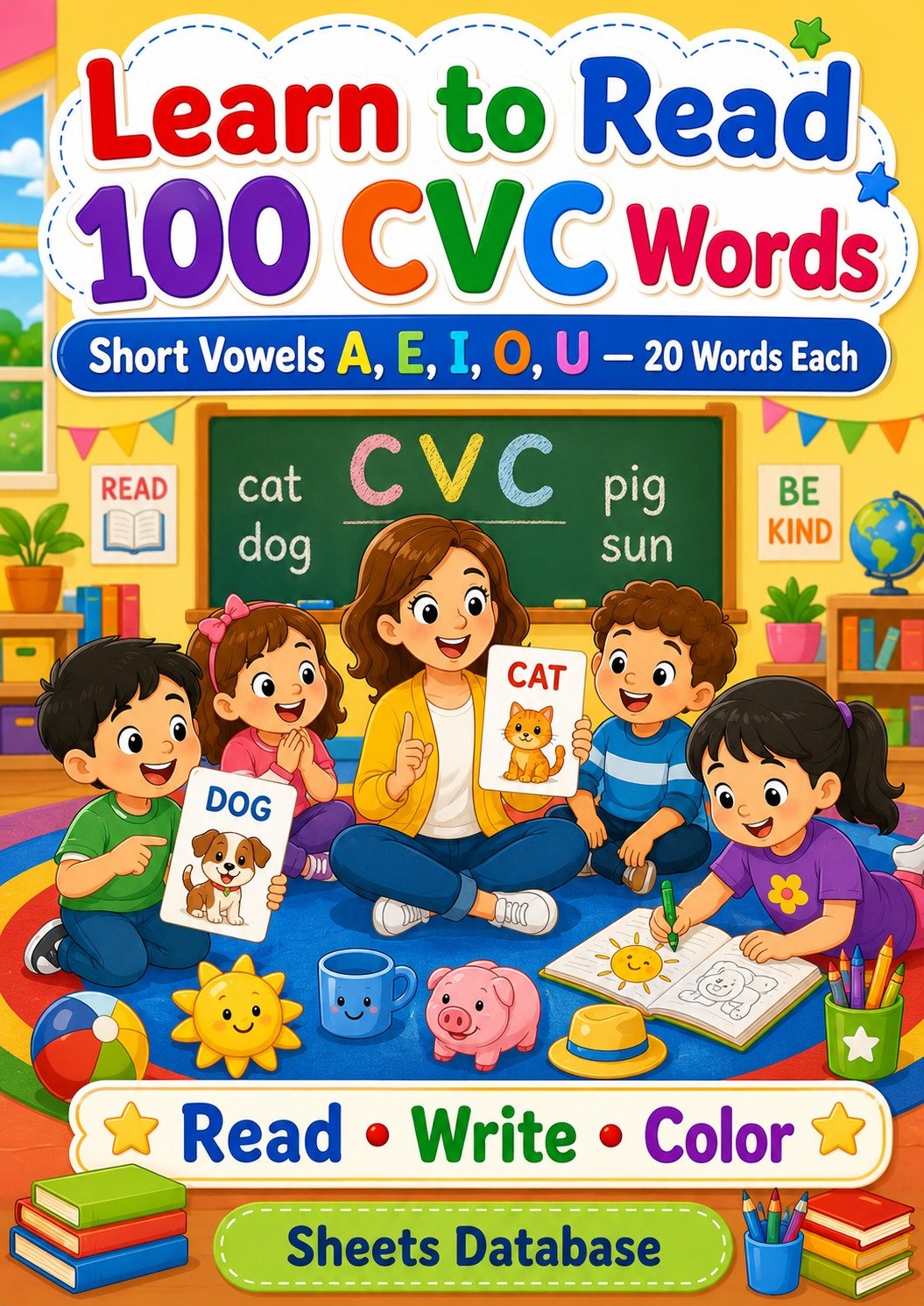
Learn to Read 100 CVC Words: A Fun Phonics Resource for Early Readers
Learn to Read 100 CVC Words is a practical and engaging resource for children who are beginning their reading journey. CVC words are simple three-letter words that follow a consonant-vowel-consonant pattern, such as cat, bed, pig, dog, and sun. Learning these words helps children understand how letters represent sounds and how individual sounds can be blended to create complete words.
What Are CVC Words?
CVC stands for Consonant-Vowel-Consonant. These words are among the first words commonly introduced in systematic phonics instruction because their spelling patterns are relatively simple and predictable.
For example:
- -at: cat, bat, hat, mat
- -en: hen, pen, ten
- -ig: pig, big, dig
- -op: hop, mop, top
- -ug: bug, hug, rug
By recognizing these patterns, children can move from sounding out individual letters to reading familiar words more automatically.
Why Learn 100 CVC Words?
Learn to Read 100 CVC Words gives young learners plenty of opportunities to practice decoding and word recognition. Repeated exposure to simple words can help children become more comfortable with blending sounds and reading independently.
Regular CVC practice can support several important early literacy skills, including:
- Phonics and decoding
- Letter-sound recognition
- Sound blending
- Word recognition
- Early spelling
- Vocabulary development
- Reading fluency
- Confidence in reading aloud
The goal is not simply to memorize words. Children should learn to identify the individual sounds and understand how those sounds work together.
How Parents and Teachers Can Use It
Parents can introduce a few words at a time and ask children to sound out each letter before blending the sounds together. Teachers can use Learn to Read 100 CVC Words during phonics lessons, small-group activities, literacy centers, or independent practice.
Making learning interactive can also improve engagement. Children can sort words by word family, match words with pictures, build words using letter cards, or write simple sentences using the words they have learned.
For example, after learning the -at family, a child might practice cat, bat, hat, and mat. This repeated pattern helps children notice how changing the first letter creates a new word.
Who Can Benefit?
Learn to Read 100 CVC Words is suitable for preschool and kindergarten learners, beginning readers, early elementary students, and children who need additional phonics practice. It can also be useful for English-language learners who are developing foundational reading and vocabulary skills.
Conclusion
Learn to Read 100 CVC Words provides a simple foundation for developing essential early reading abilities. By practicing common CVC patterns, children can improve sound blending, word recognition, spelling, and reading confidence. With short, regular practice at home or in the classroom, CVC words can become an enjoyable stepping stone toward fluent reading.