I Can Read English: A Fun Guide to Building Early Reading Skills
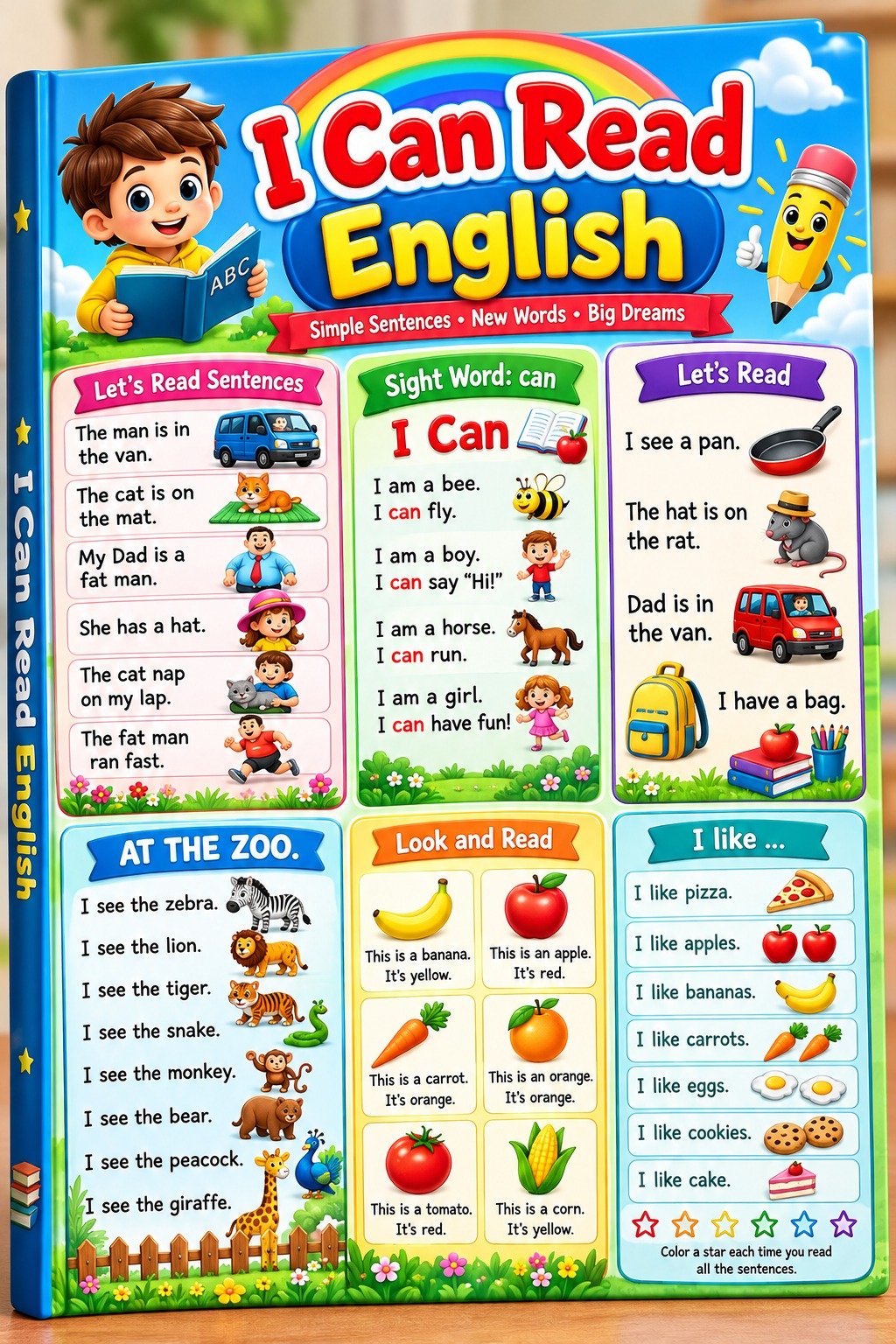
I can read English is an encouraging learning resource for children who are beginning to develop their English reading skills. Learning to read is an important milestone that helps young learners recognize words, understand sentences, build vocabulary, and communicate more confidently. With simple reading activities and regular practice, children can gradually move from recognizing individual letters to reading complete sentences and short stories.
Why Is Learning to Read English Important?
Reading is a fundamental skill that supports children’s academic growth and language development. When children practice reading regularly, they become more familiar with common words, sentence patterns, and the sounds of the English language.
I can read English encourages beginners to develop their reading abilities step by step. Simple words, short sentences, and age-appropriate passages can make the learning process more manageable and enjoyable.
Early English reading practice can help children:
- Recognize letters and their sounds.
- Read familiar words and simple sentences.
- Develop vocabulary and pronunciation.
- Improve reading comprehension.
- Build confidence when reading aloud.
- Strengthen spelling and writing skills.
- Develop a positive attitude toward books.
These foundational abilities prepare children for more advanced reading and writing activities as they progress through school.
Effective Ways to Improve Reading Skills
Children learn best when reading practice is enjoyable, consistent, and appropriate for their ability. Parents and teachers can introduce a few words at a time and encourage learners to sound out unfamiliar words rather than relying entirely on memorization.
Using I can read English as inspiration for daily reading practice, adults can introduce phonics activities, picture-word matching, simple sentences, and short stories.
For example, children can begin with sentences such as “I see a cat,” “The sun is hot,” and “This is my book.” These examples help learners connect familiar vocabulary with sentence structure and meaning.
Reading aloud together is another effective technique. Adults can model correct pronunciation, pause to explain unfamiliar words, and ask simple questions about the text. Repeating familiar passages also helps children recognize words more quickly.
How Parents and Teachers Can Support Young Readers
Parents can establish a daily reading routine by setting aside 10–15 minutes for a book or reading activity. Teachers can organize reading groups, phonics exercises, and individual practice according to each child’s needs.
To make learning interactive, ask children to describe pictures, identify words they recognize, complete missing words in sentences, or retell a short story in their own words. Praise their effort and progress to help them stay motivated.
Who Can Benefit?
I can read English is a suitable learning theme for preschoolers, kindergarten children, early elementary students, and beginners learning English as an additional language. It can support classroom instruction, home learning, tutoring, and independent reading practice.
Conclusion
I can read English represents an important step toward confident and independent reading. Through phonics, vocabulary building, simple sentences, and regular practice, children can strengthen their literacy skills and develop a lasting interest in reading. With patience and encouragement from parents and teachers, every small achievement can bring young learners closer to reading English with confidence.