Learn to Read with CVC Paragraphs: Build Early Reading and Phonics Skills
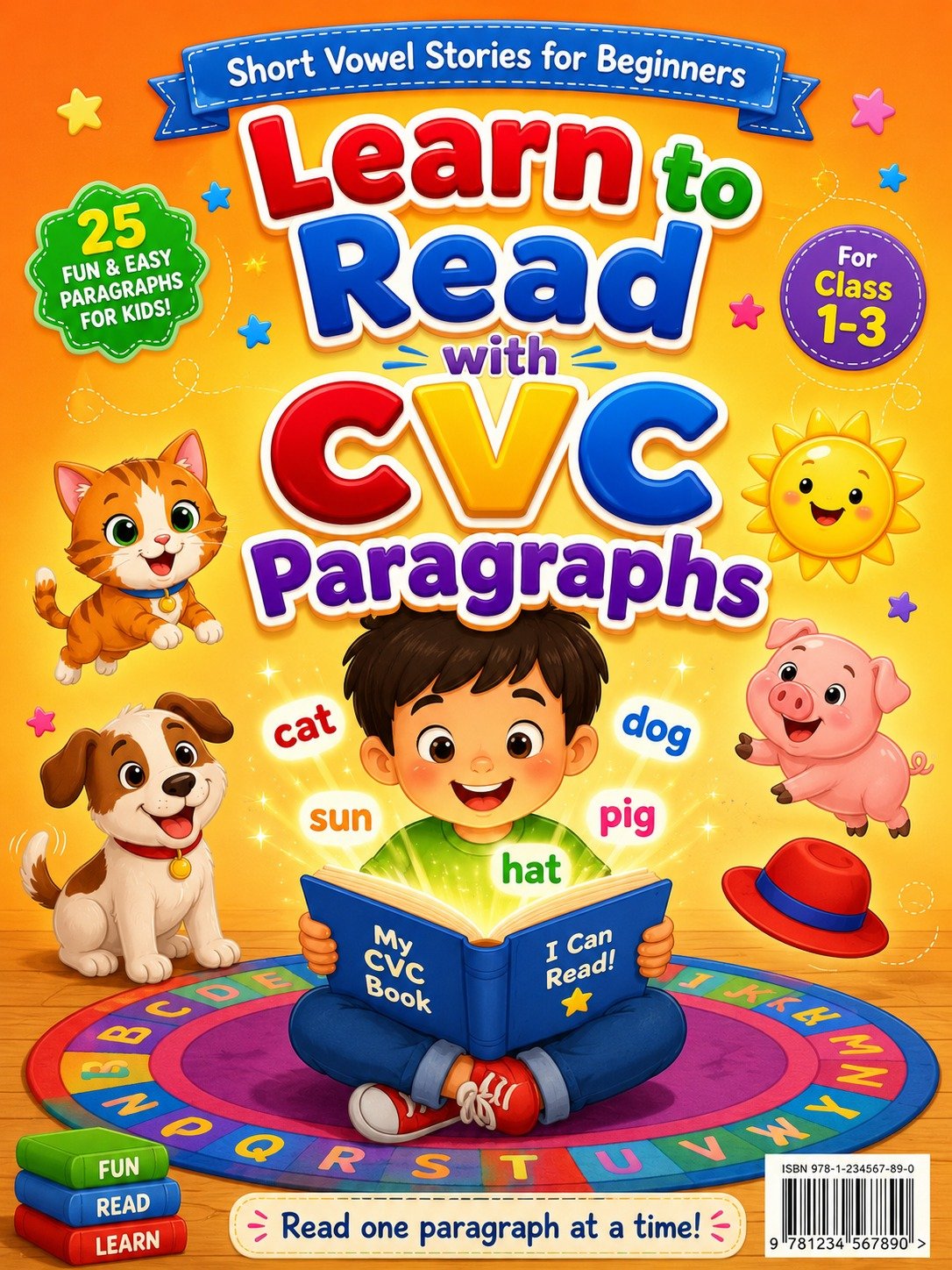
Learn to Read with CVC Paragraphs is a helpful educational resource for children who are beginning to read English. CVC stands for consonant-vowel-consonant, a simple word pattern commonly found in words such as cat, dog, pen, sun, and bed. Practicing these words in short paragraphs helps young learners move from recognizing individual sounds to reading complete sentences and understanding short passages.
What Is Learn to Read with CVC Paragraphs?
Learn to Read with CVC Paragraphs focuses on an important stage of early literacy: combining phonics skills with connected reading. Children first learn to identify letter sounds, blend those sounds together, and recognize simple words. They can then practice using these words in meaningful sentences and short paragraphs.
For example:
Sam has a cat. The cat is on a mat. Sam can pat the cat.
This simple passage gives beginners opportunities to recognize familiar CVC words while practicing sentence reading. Short passages can also help children understand how individual words work together to communicate a complete idea.
Benefits of CVC Paragraph Reading
Using Learn to Read with CVC Paragraphs as part of a regular reading routine can support several essential learning skills.
- Phonics development: Children practice connecting letters with sounds and blending sounds to read words.
- Improved reading fluency: Repeated reading helps learners recognize familiar words more quickly.
- Vocabulary growth: Beginners encounter useful words in meaningful contexts.
- Better comprehension: Short paragraphs encourage children to understand ideas rather than read isolated words only.
- Increased confidence: Simple, achievable passages help children experience progress and enjoy reading.
- Stronger spelling skills: Reading and writing CVC words reinforces letter patterns and sound recognition.
These skills provide a foundation for progressing toward longer words, more complex sentences, and advanced reading materials.
How to Practice CVC Paragraphs Effectively
To get the most from Learn to Read with CVC Paragraphs, begin by reviewing individual letter sounds. Ask children to blend simple words such as map, sit, hot, and cup. Once they can read these words comfortably, introduce short sentences and paragraphs that use familiar vocabulary.
Encourage learners to read aloud slowly, point to each word, and repeat the passage until it becomes easier. After reading, ask simple questions such as “Who has the cat?” or “Where is the cat?” This develops comprehension alongside decoding skills.
Parents and teachers can also use picture clues, word cards, tracing activities, and simple sentence-writing exercises. Keep practice sessions short and positive, and gradually introduce new words as the child progresses.
Remember that some English words do not follow the basic CVC pattern, so beginners benefit from learning these words separately when they appear.
Who Can Benefit from This Resource?
Learn to Read with CVC Paragraphs may be suitable for preschoolers, kindergarten children, early primary students, and beginner English learners who are developing phonics and reading fluency. Parents can use suitable passages for home practice, while teachers can incorporate them into literacy lessons and small-group reading activities.
Choose passages according to each child’s reading level and provide additional sound-blending practice when needed.
Conclusion
CVC reading practice helps children build essential skills that support long-term literacy development. By moving from letter sounds to simple words, sentences, and short paragraphs, learners can gradually become more confident and independent readers. Learn to Read with CVC Paragraphs can be a valuable addition to a structured phonics routine, making early English reading more accessible, engaging, and rewarding.