
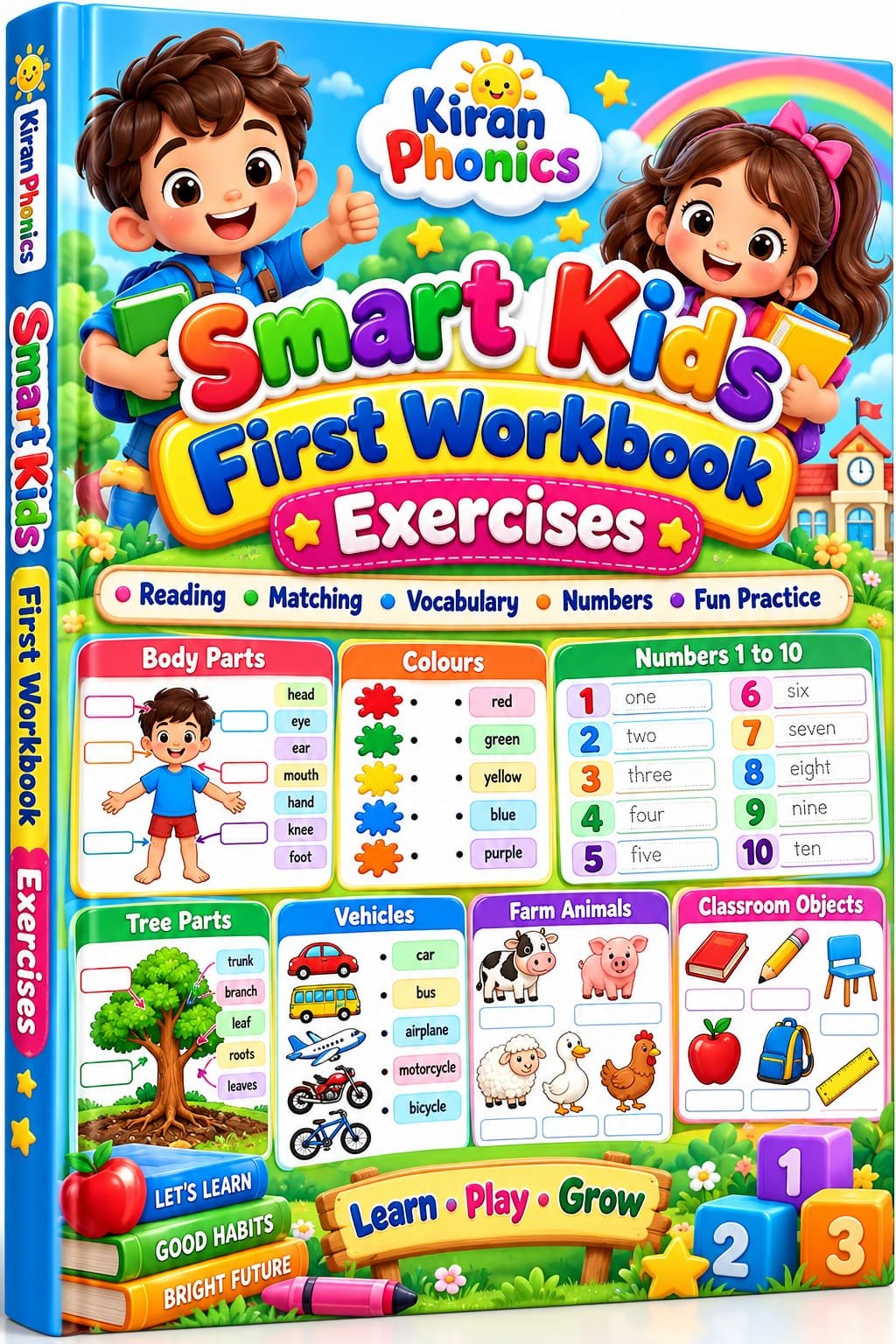
Smart Kids First Workbook Exercises: Fun Learning for Young Children
Smart Kids First Workbook Exercises is a useful educational resource for young children who are beginning their learning journey. Early childhood is an important time to develop essential skills such as letter recognition, number awareness, vocabulary, drawing, tracing, and basic problem-solving. Workbook activities can make these skills easier to practice through simple, engaging exercises that encourage curiosity and independent learning.
What Are Smart Kids First Workbook Exercises?
Smart Kids First Workbook Exercises focuses on the idea of introducing foundational learning through age-appropriate workbook activities. First workbooks often include tracing lines, recognizing letters, counting objects, matching pictures, identifying shapes, coloring, and completing simple patterns.
These activities help children become familiar with early academic concepts while improving the coordination needed for writing and drawing. For example, tracing letters prepares learners for handwriting, while counting pictures introduces basic number concepts. Matching activities encourage observation and help children identify similarities and differences.
A well-balanced workbook can also introduce basic English vocabulary and encourage children to follow simple instructions.
Benefits of Early Workbook Practice
Using Smart Kids First Workbook Exercises as part of a regular learning routine can support several important developmental skills.
- Early literacy: Letter recognition, vocabulary, and pre-reading activities prepare children for learning to read.
- Number awareness: Counting and number-matching tasks introduce basic mathematical concepts.
- Fine motor development: Tracing, coloring, and drawing help strengthen hand control.
- Cognitive skills: Matching and sorting activities encourage observation, memory, and logical thinking.
- Concentration: Completing short exercises helps children practice focusing on a task.
- Learning confidence: Achievable activities allow children to experience progress and celebrate their efforts.
These skills provide a foundation for more structured learning in preschool and primary school.
How to Use Smart Kids First Workbook Exercises Effectively
To get the most from Smart Kids First Workbook Exercises, choose activities that match the child’s age and current abilities. Begin with simple tasks, such as tracing lines, matching familiar pictures, or counting objects. Introduce more challenging activities gradually as the child becomes comfortable.
Parents and teachers should explain instructions clearly and demonstrate an example before asking children to work independently. Encourage children to say letter names aloud, count objects as they point to them, and describe the pictures they see.
Keep learning sessions short and enjoyable. Allow children to use crayons, pencils, picture cards, and everyday objects to connect workbook activities with real-life experiences. Praise effort and improvement rather than expecting every answer to be perfect.
It is also helpful to revisit activities regularly so children can reinforce previously learned skills.
Who Can Benefit from This Workbook?
Smart Kids First Workbook Exercises may be suitable for preschoolers, kindergarten children, and young learners who need additional practice with early literacy, numeracy, and fine motor skills. Parents can use workbook activities at home, while teachers can incorporate them into classroom routines and learning centers.
The most suitable activities depend on each child’s developmental stage and learning needs.
Conclusion
Early learning becomes more effective when children have opportunities to explore, practice, and discover new concepts. Through tracing, matching, counting, and other age-appropriate activities, children can strengthen essential skills while developing confidence and curiosity. Smart Kids First Workbook Exercises can be a valuable addition to a balanced early-learning routine, helping young learners prepare for future classroom success.