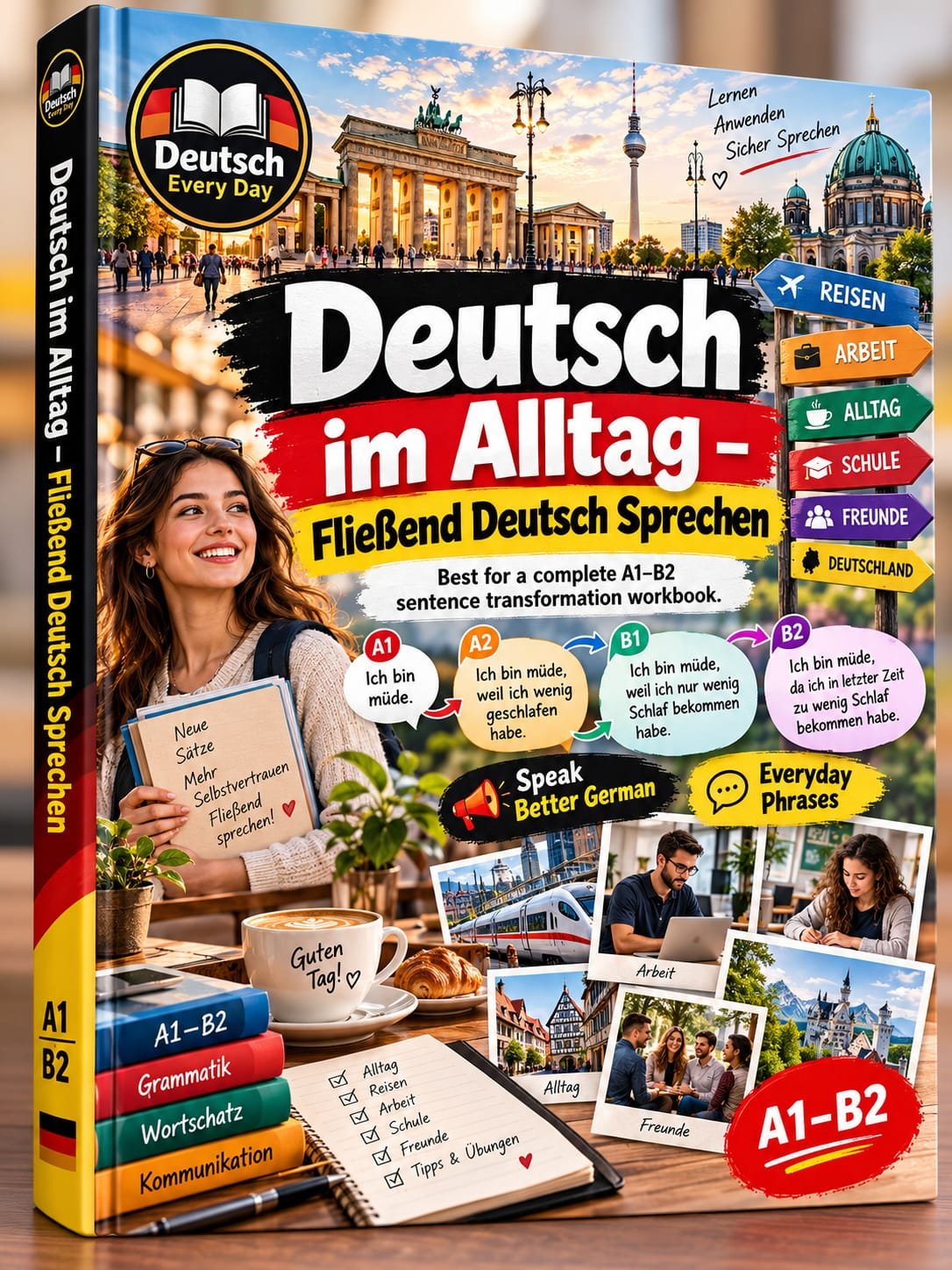
Deutsch im Alltag – Fließend Deutsch Sprechen: Improve Your Everyday German Communication
Deutsch im Alltag – Fließend Deutsch Sprechen is a useful learning topic for anyone who wants to speak German more naturally and confidently in everyday situations. Learning practical German expressions helps students communicate with native speakers, understand common conversations, and feel more comfortable using the language at work, school, while traveling, or in daily life. With consistent practice, learners can gradually improve their vocabulary, pronunciation, listening comprehension, and speaking fluency.
What Is Deutsch im Alltag – Fließend Deutsch Sprechen?
Deutsch im Alltag – Fließend Deutsch Sprechen focuses on practical German communication rather than memorizing isolated vocabulary. Everyday German learning often includes greetings, introductions, shopping, ordering food, asking for directions, discussing hobbies, making appointments, and talking about family or work.
For example, beginners can practice useful expressions such as:
- Guten Morgen! — Good morning!
- Wie geht es dir? — How are you?
- Ich hätte gern einen Kaffee. — I would like a coffee.
- Können Sie mir bitte helfen? — Could you please help me?
- Was machst du heute? — What are you doing today?
Learning expressions in context helps learners understand when and how to use them. It also introduces common sentence patterns that make everyday conversations easier.
Benefits of Practicing Everyday German
Using Deutsch im Alltag – Fließend Deutsch Sprechen as a learning goal offers several benefits:
- Improved speaking fluency: Regular conversation practice helps learners respond more naturally.
- Expanded vocabulary: Everyday topics introduce useful words and expressions.
- Better listening skills: Exposure to spoken German helps learners recognize familiar phrases and understand different speaking speeds.
- Greater confidence: Practicing realistic situations reduces hesitation when communicating.
- Practical communication: Learners can prepare for shopping, travel, appointments, work, and social interactions.
- Stronger grammar skills: Repeated use of sentence patterns reinforces word order, verb conjugation, and question formation.
These skills are valuable for beginners and intermediate learners who want to move beyond textbook exercises and use German in real situations.
How to Practice German Every Day
To make progress with Deutsch im Alltag – Fließend Deutsch Sprechen, set aside 15–20 minutes daily for active practice. Choose one everyday topic, learn five to ten useful expressions, and use them in short conversations.
For example, practice introducing yourself in German: Ich heiße Anna. Ich komme aus Pakistan. Ich lerne Deutsch. Then expand the conversation by discussing your hobbies, studies, or daily routine.
Listening to German podcasts, watching beginner-friendly videos, reading short dialogues, and repeating sentences aloud can improve pronunciation and listening comprehension. Speaking with a language partner is also helpful because it gives you opportunities to respond spontaneously.
Do not worry about making every sentence perfect. Focus on communicating your message, reviewing mistakes, and gradually improving accuracy.
Who Can Benefit from This Learning Resource?
Deutsch im Alltag – Fließend Deutsch Sprechen may be useful for A1–B1 German learners, students preparing for language examinations, travelers, and people who want to communicate in German for work or personal reasons. The most suitable activities depend on the learner’s current level and learning objectives.
Conclusion
Learning German becomes more rewarding when you practice expressions that are useful in everyday life. Through regular speaking, listening, vocabulary revision, and realistic conversations, you can gradually become more comfortable communicating in German. Deutsch im Alltag – Fließend Deutsch Sprechen captures an effective approach to language learning: practice consistently, use German in meaningful situations, and build fluency one conversation at a time.